Showing posts with label rhythm game. Show all posts

Thursday, May 12, 2016

5/12 - Groove Coaster 3: Link Fever Hits Round 1 San Jose!

By Andy Castro

On Sunday, May 1st, 2016, Eastridge Round 1 rolled out three cabinets of Groove Coaster 3: Link Fever! Groove Coaster, made by Taito (and not Konami for once), has been a successful mobile music game, but the arcade version was nearly impossible to find in the US until the release of this third installment. Today, we’ll be looking at this new addition to the Eastridge Round 1 lineup, and talk to local players about their experience with what the game has to offer.


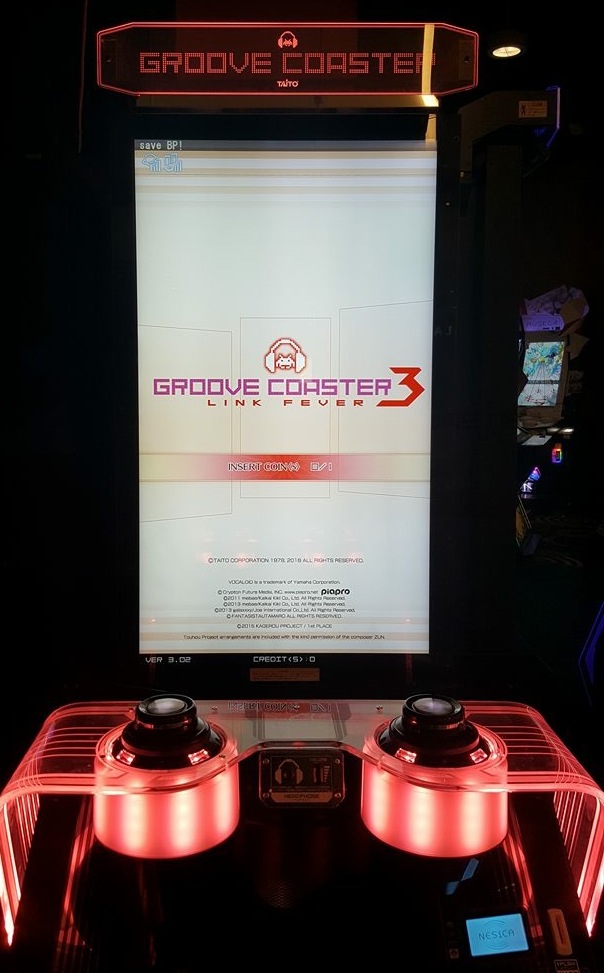
The game’s title explains a lot on its own. You choose an avatar that rides along a track designed uniquely for each song and chart you wish to play. While your avatar glides, slides, and tumbles around each coaster, various notes appear along the track, and your score is graded on how on-the-beat you hit each note, as well as how much “chain” (combo) you build. The controls to the game are also pretty simplistic, relying solely on actions made on the two “boosters” attached to the cabinet. The game can have you press the booster’s buttons, hold them down, or shake the boosters in a variety of different ways depending on the difficulty of the chart. You don’t have to worry too much about remembering every kind of note, either, as the game warns you what kinds of notes each chart will have before the song starts. Handy!
Front of Cab.jpg
While the cabinet is very tall, the two boosters
can comfortably fit in the palms of your hands.

Groove Coaster 3 had been rumored to arrive at Eastridge Round 1 for a couple of months, and many music game regulars had been anxious to give the game a chance. On Sunday morning, a good number of Round 1 regulars anxiously waited as the machines were set up, with some who were live-tweeting the process while others prayed that the game’s required updates happened quickly and without issue. I talked to two of NorCal’s regular music gamers, Eric Andrus and Corey Prasek, who had not only shown interest in the game, but also had a lot of talk about due to each having previous experience with the game while in Japan.


“I actually didn’t really care for Groove Coaster when I tried an earlier version in Japan,” Eric admitted, “but Groove Coaster 3 is better. A lot better. When I had first tried it, the game felt too simple and all the menus were in Japanese, but this version adds a lot of interesting features as well as a total localization into English”. While casual gamers have expressed difficulty in understanding the menus and UI in other music games Round 1 provides (we’re looking at you, Konami), Groove Coaster 3 was localized in English for its “worldwide” releases in America and Australia. Even Linka, the game’s virtual navigator, was given an English voice actress, Jennifer Skidmore, just for the international releases. Compared to other music games, the amount of English will almost feel gratuitous at times!


The gameplay and presentation of Groove Coaster is also very eye-catching and colorful, with unique videos for every song to make each chart’s “coaster” feel incredibly immersive into the music. Eric cautioned that this could be a double-edged sword, though: “The game is super fun and easy to get into, but at the same time it feels as though the only way the game can get around the low skill ceiling is through abusing the UI for cheap visual gimmicks.” Some charts do have fast bpms that, combined with a zoomed-in camera angle, makes reading charts more difficult, and overall, the game has been criticized before by the competitive music game community for being extremely reliant on memorization and playing charts repeatedly. It does not help that the game itself hides notes throughout each song (called “ad-libs”) that can easily change the tide of victory in a competitive setting.

Full Chain.jpg
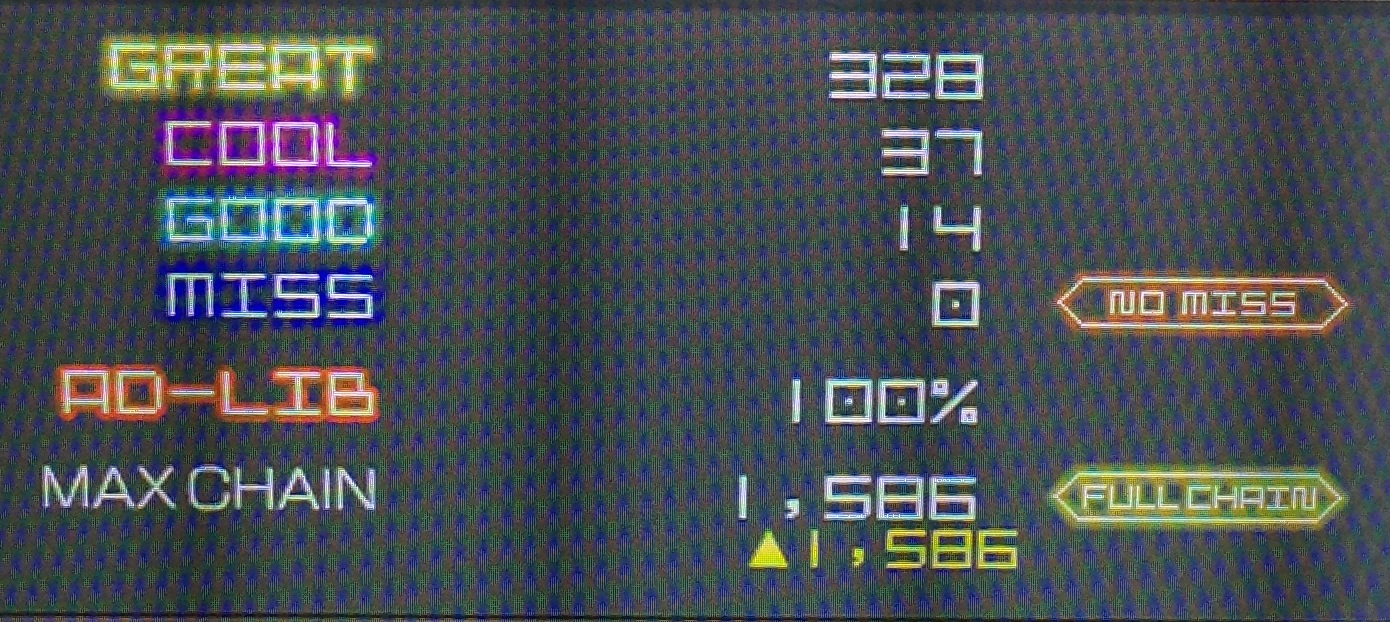
A “NO MISS” means everything visible was hit, but a “FULL CHAIN” only
occurs if you hit every ad-lib. A “PERFECT” can’t occur unless you hit every
ad-lib note with perfect timing, too. Random guesses will only help so much!


Corey didn’t have as big of an issue with the visual gimmicks or the ad-lib concept, but said that the only issue he had was with the customization features that are only available online (which has yet to be localized to English). “The NESICA service is a pain to sign up for on the website,” Corey groaned, despite being fluent in Japanese.


“Groove Coaster 3 is also a bit more diverse in the song selection,” explained Corey. “The addition of a lot of Japanese club producers is a welcomed addition, but the game itself has something for everyone.” Corey and Eric both agreed that Groove Coaster 3’s extensive songlist will do a lot to draw in a lot of players. The game has many originals, but also includes J-Pop songs, anime licenses, Touhou arrangements, and even songs from other popular games like Puzzles and Dragons, Danganronpa, and even Konami’s Sound Voltex and IIDX! While Corey was mostly excited about the increase in Japanese club track producers from the previous version of Groove Coaster, he firmly believed that the game could easily allow anyone to find a set’s worth of songs they would enjoy playing.


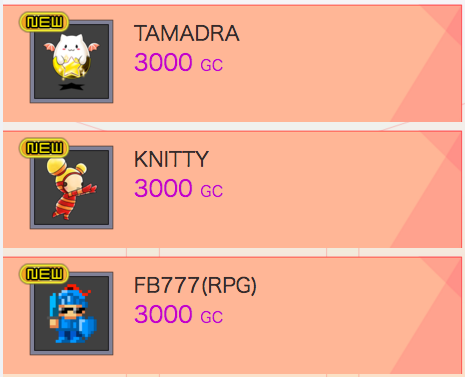
While the game is playable offline, you are able to save your scores with a NESICA card, available at Round 1’s card desk for $10. With a NESICA card, you are able to access global events, as well as customize unlockable avatars, titles, and messages to send friends during multiplayer matches! You’ll also need to save scores to unlock bonus charts for select songs, so a card is definitely a worthy purchase.

Avatar Shop.png
You know you want a card just so you can have a fancy avatar while you play!
They have characters from Puzzles and Dragons, Pitapat Beat, and more!

The game has great potential to be Round 1’s most popular music game, and the lines a proving it. Don’t just take our word for it, though - go and try out Groove Coaster today!

Friday, April 8, 2016

4/7 - Let's Talk GITADORA!

By Ann Nakamura

At the Arcade Hub, we’ve gone over many music games such as MUSECA, Sound Voltex and Crossbeats. However, there is one particular game we have not covered, and it’s because we wanted to save the best (in my opinion) for last! GITADORA is currently a Round 1 exclusive and we talked to David Aerts and Simm Broome for their insights!

GITADORA Tri-Boost is the most recent iteration of the GITADORA series.

As many of you may or may not be aware, GITADORA, a drum and guitar simulator game created by Konami, has been gaining popularity not only for the vast amount of songs, content and unlockables the game presents, but the community that is growing from it.

GITADORA was formerly known separately as Guitarfreaks and Drummania (herein after GF/DM). If you are familiar with Rock Band or Guitar Hero, the gameplay mechanics are very similar: with the guitar, you hold down a fret and strum the note when prompted, and with drums, you hit the corresponding drum pad you see on your screen. GITADORA’s gameplay has upgraded since its “mania” and “freaks” days where the guitar features 5 frets instead of the classic 3, and the drums are now equipped with another pedal and two other pads. "Beyond just the controllers, the game has also received a significant interface overhaul, making the leap to HD and bringing many new gameplay modifiers that bring it close in line with more competitive Bemani games such as IIDX and Sound Voltex." veteran David Aerts says. "Finally, there's a new 'Master' difficulty which challenges players with some of the most insane charts of any active music game."

The general look of the cabinets: two guitars on one side, drum set on another.

The music in GITADORA is varied all across the board. You have licenses from artists such as Galneryus, BABYMETAL and Dragonforce, and also BEMANI originals from GFDM artists such ASAKI, Thomas Howard Lichtenstein and Akhuta. Every single song has a guitar chart, bass chart and drum chart, each ranged from the easy level 1.0 to the difficult 9.0 and above. Like many music games, GITADORA's learning curve may seem kind of intimidating at first, especially when a player has to keep in mind certain chords or drum patterns. This game also requires some amount of physical movement, especially for the drum counterpart where you are constantly moving your arms and legs. Simm Broome, another veteran player who has been playing the games for more than a decade, goes, "It is one of the few current rhythm games that try to simulate an actual instrument and it is probably one of the best rhythm games to do a good job at it."

What also makes GITADORA truly unique is the concept overall: it is the Rock Band before Rock Band and the Guitar Hero before Guitar Hero. Being able to "session" with your friends, meaning cooperatively play with each other during play, adds a great social element to it where each player is responsible for each of their instruments. "While games such as Pump it Up have cooperative features such as Couples charts, there's nothing else that lets two (or three!) people playing completely different games combine their efforts to jam out a single song." Aerts exclaims, "Beyond simply being fun, it also lets people with varying gameplay preferences and skill levels work together seamlessly--- Rather than waiting on someone else to play drums, why not just grab the guitar and jam along?"


Tri-Boost's current unlock system consists of growing Oto-bear Flowers and gaining stickers for your profile.

The game itself, GITADORA, is very new to Northern California. GITADORA was only playable in Southern California Round 1's, leaving Northern California denizens to play on classic Guitarfreaks and Drummania (in particular, V6 and V8). Because of having such a new game, both Aerts and Broome agree that there are some new players giving the game a shot. These two veterans agree that because GITADORA is new in many aspects (gameplay, e-amusement support, etc), people are starting to take an interest in the game and are at least trying the game out. 
When asked what advice should be given to new players, Broome noted the importance of bringing your own sticks. "The sticks at the machine are not comfortable to play because it is attached to the machine with bulky metal pieces." he says. "I also recommend resisting the urge to put on any sort of 'auto' mod. It may seem useful but it only holds you back once you try to progress to the harder songs." 

"Just have fun!" David notes. "Grab a couple of friends, pick something easy and just rock out. We all look ridiculous doing it, but we do it anyway."

Thursday, February 11, 2016

APPEND! MUSECA gets a update two weeks into R1!

By Ann Nakamura

Thanks to Paul Richardson at Bemanistyle, we had gotten a tip regarding an update that was supposed to change some minor flaws (not necessarily bugs or glitches) regarding MUSECA's gameplay. This update also dramatically improves readability during gameplay. Let's take a look!

The update comes after two weeks of reporting MUSECA entering Round 1 USA's gamefloor. The update, according to Richardson, allows players to now change the lanes from the "W-shape" (default MUSECA play lane, three blue buttons on top, two yellow buttons on bottom) to a "M-shape" (inverse of the play lane, two yellow buttons on top, three blue buttons on bottom) and to a flat shape, where the buttons are all in one line. There were also changes to the UI system as well, making the interface cleaner and somewhat easier to navigate. The song selection screen has also improved in terms of loading time. However, we were unable to locate the options for lane brightness or the note colors both in-game and on the e-amusement site for MUSECA. There was one other change that we noted where "Story Mode" had been moved out of the main menu, and the player can now opt out of it. 

The one really notable change with the February 10th update.

Our field correspondents, Andy Castro and Oliver Wing had gone to Round 1 and gave MUSECA a try with the updates. I asked them if they had any change of heart about the game after getting this update from KONAMI. 

 "MUSECA is a little better now, but it should have been like this from the start." Oliver says. "More than ever it feels like we got a beta version that was missing important features like, you know, 'flatten the lanes'." Wing does note the UI change in the game, and how it has actually improved navigation. "The UI is better now that it's been decluttered a little." He also noted that, "The option screens now have better mini-images and less explanation text, and that they actually inset the 'turn this button to scroll your Grafica/songlist/frame options' diagrams in a much more visible way.

Andy looked at the update with an overall approach, explaining: "The game is now a lot easier, but it does not make the game conceptually better". Andy states after trying out a couple of games with the new update that, "It still has a lot of hurdles that it needs to fix, but this update has proven that what they [KONAMI] are doing is listening to our input and willing to adapt. They're open to suggestions and it's a very good step in the right direction."

Despite Castro's words about the game not being better overall right now, he is very positive that the game will start to improve as time goes on. He explains how Sound Voltex Booth (herein SDVX), another music game by KONAMI, had similar issues that MUSECA is currently having with its first installment. Andy reiterates that the current iteration of SDVX has improved tremendously since the very first release, and is now a very popular, user friendly game. While MUSECA is still in its early stages of release, it may take some time (months or even years) before a general consensus can be made about the game. 

Wednesday, October 7, 2015

10/7 - Let's Talk Sound Voltex


While Northern California has been home to a plethora of music games, one particular music game is standing out. Sound Voltex is the only music game in Northern California to be housed in a public arcade and is almost exclusive to Round 1! But what makes this game so unique? What makes this game so great that both old and new music game players alike are willing to stand in line 10 to 15 minutes at a time? We at the Arcade Hub talked to Andrew Castro and Kevin Park in finding out what's the deal with Sound Voltex?

The title screen for Sound Voltex III: Gravity Wars.


Sound Voltex is a music game created by Konami, under their BEMANI series of games. It utilizes four white keys and two black keys and two "cross-fader" knobs. What makes this game already so visually different is the orientation of the cabinet itself. The screen is positioned vertically, and the cabinet itself is very flashy that glows gold. The visuals of Sound Voltex are very different but yet, interesting to customers passing by at Round 1.

In Sound Voltex, you are a ship, navigating through a song in hopes of clearing or passing a song. To achieve a good score, one must press or hold buttons that correspond to the notes on the screen, and, when prompted, turn the knobs in the direction the game tells you.  Kevin Park, a seasoned Sound Voltex player, explains the features of the game. "If you look at Sound Voltex, there are a lot of cool features, it's a lot more engaging and all and all, it's eye-candy." he explains. "Big easy buttons, two knobs... it's definitely more simplistic and friendly." This game tends to be a "crowd-stopper" as many individuals who have never heard or seen the game before stop to take a look at what a player is doing. Andrew Castro talks about why this may be. 

The setup of Sound Voltex: four white buttons, two black buttons and two cross-fader knobs.

"This is a game where I, more or less feel like I'm doing more of a performance than most of the games say for maybe Dance Dance Revolution." Andy says. "Because the whole point of it is that, there is just this giant screen where everyone can come and watch and I'm busy moving my whole body, trying to read all these screen turns and knob stuff."

A quote from Castro, a cool aspect of this game is that, "I can go 'wiggy wiggy wiggy' with the knobs".

The game itself offers a variety of music. While Sound Voltex has some Konami Originals (music from the Konami franchise), it also contains tracks from the very popular "Touhou" series (a shoot-em-up game) and Vocaloid series.

What makes this game so friendly to new players is that Sound Voltex itself, both in gameplay and visuals, is not intimidating. New players can enjoy songs they are familiar with without being scared of having to be perfect at the game. "The beginner levels like when you first get into the game, it's really appealing, it's really fun and it's really addicting." Kevin comments. "And the way that the game is constructed, it's really easy to get into." The timing windows of Sound Voltex are forgiving. According to Kevin, the "perfect" judgment (meaning you hit a note perfectly) window is a few frames wider in comparison to Beatmania IIDX's . It allows for individuals to learn the game at their own pace rather than having to strive to be as good as the majority of players like with Beatmania IIDX.

For another player, Eric Andrus, Sound Voltex has become an investment for him. With over 300 plays, he's easily spent about over $400.

While many individuals are flocking to Sound Voltex, it begs the question: is this game reviving the music game community? Kevin does not believe so. "Reviving is a big word." Park says. "I wouldn't say that the [music game community] is 'dead' in the first place: Arcades aren't really popular in the first place." Kevin does believe that Sound Voltex is at least getting music gamers, old and new, interested in the genre again. "I want to say that Sound Voltex sparks the interest in people or reignites the passion that people used to have and everything, but I wouldn't say that people are going to start playing music games just because Sound Voltex is there." he explains. "I think it's at least good start."

At Round 1, both machines are back to back which also allows for "Friend Mode" to be enabled where both players can play together cooperatively.

This game has truly started to bring interest back into arcades. What Sound Voltex offers that many music games nowadays do not is that player-to-player co-op. "If you don't have an e-amuse card, buy one." Andy exclaims, "For people who have an e-amuse card and they're into the game: use "Friend Mode"! "Friend Mode" is very important in my opinion because that's how I feel I feel like I got really good. Don't be afraid to talk to your friend who's better and say, 'hey, I'm stuck on x difficulty, can we do Friend Mode' and the games will link together." Sound Voltex brings together more community aspects by being able to play with your friends in a fun, cooperative manner. It has similar aspects to GITADORA where players are playing together just to have fun and to get better rather than competing and trying to "outshine" each other. Andy's final statement for the game overall is that, "You learn through a shared experience which makes it even more community driven: don't be afraid to sit out a turn so you can link with somebody! It builds that bond, that community, and that's half the fun of these games."


Special thanks to Kevin Park and Andrew Castro for their contributions to this article. 

Saturday, October 3, 2015

Schedule for this week!

Schedule for this week! (October 5th - October 9th)


Monday, October 5th

Meet the Staff! (Part 1)


Summary: While we may know so much about the players who come to Round 1, we tend to forget who is responsible for making Round 1 what it is today! From the managers who were in training since March to the staff who started training almost a month, two months in advance from opening, we at The (Unofficial) Round 1 Arcade Hub get an inside look into the staff and their routines! [Category: Informational, Amusement] Picture courtesy of Allen Tran.


Wednesday, October 7th

Let's Talk Sound Voltex


Summary: One particular music game at Round 1 has everyone waiting in very lengthy lines. Sound Voltex III: Gravity Wars, created by Konami, is a new music/rhythm game that you can only find at Round 1. We talked to some of the players about what it is, why it's a big deal and how it's bringing players, old and new, into the mix! [Category: Informational, Facilities]


Friday, October 9th

Fan Friday


Summary: In this segment, we just talk about Round 1! This ranges from fanmail, word-of-mouth, Facebook posts, pictures, everything! [Category: Fan Friday, Amusement]

Tuesday, September 22, 2015

9/22 - crossbeatsREV. has crossed paths with Round 1 San Jose!

Hello everyone! I am Sue, the Super Mechanic, here to tell you that Round 1 San Jose has acquired a new music/rhythm game!
crossbeatsREV., a rhythm/music game from Capcom, is now on our floor for everyone to play! Our team was hard at work, some even coming in on their days off, to get the machine built, prepared and connected to the Banapass network. The game was on the floor and turned on September 18th. Right now, our Round 1 has four machines and fans of the game started waiting for their turns, excited to finally play on a dedicated crossbeats arcade cabinet!

Managers and staff were testing the game to see if everything was functional.
By the way, did you know that crossbeats was originally an iOS game? Produced by Naoki Maeda, the mastermind behind the popular Dance Dance Revolution series, crossbeats is one of two music games (the other being Cytus) Capcom has released into arcades!


As I mentioned, crossbeatsREV. is connected to the Banapass network! If you love crossbeats and reeeeeeeeeeeeeeeeeeeally want to get into it, why not buy a Banapass card? You don't need it if you want to play the game, but it's great if you want to save your scores, unlock new songs and icons and so much more! They are available at the Game Card counter for $7.  And the last time I peeked over at the Game Card counter, there are three unique designs for the Banapass cards.

So what are you waiting for?! Let's crossbeats!

-Sue